

Hello all,
October already — that’s hard to believe. Things here have been a real whirlwind since June, but have started to settle down a bit in the last few weeks.
Since July began we have: hosted guests from Anabaptist Mennonite Biblical Seminary (AMBS) and Mennonite Mission Network (MMN); attended Northeast Asian Regional Peacebuilding Institute (NARPI) and the Fellowship of Mennonite Churches in Taiwan (FOMCIT) pastor’s retreat; and, in the span of ten days, given four different presentations — one history presentation in English, two three-hour seminars in Chinese, and a sermon, Caleb’s first ever in Chinese.
Guests: We were very lucky to help host David and Shana Boshart for about ten days in July. David is the President of Anabaptist Mennonite Biblical Seminary (AMBS) and takes a few international trips a year to connect with global Mennonite churches. For the last few days of the trip they were joined by Andios Santoso, our Mennonite Mission Network (MMN) supervisor, and Marisa Smucker, MMN’s CEO, on the beginning of a longer Asian trip.
It’s a bit of a cliche but felt very true in this case that we realized how much we’ve learned here by hosting guests. Though our Mandarin is kilometers from fluent, we were able to hold our own in many things and help everyone navigate through any number of cultural and logistical hurdles.
David and Shana were up for us to teach them one Mandarin phrase a day — highlights for those of you interested include 你好 (nì hǎo,hello), 謝謝 (xìe xìe,thank you), 好吃 (hǎo chī,good eat, aka this is delicious),and 吃飽了(chī bào le,I’m full). Vocab should help indicate that we ate a lot while they were here! Large banquets, preferably of seafood, around tables with lazy susans are the go-to ‘nice’ dinner; we and our guests were treated to them frequently.
As part of these visits we got to see a few of the tourist sights in the Taipei area we had not yet seen, and meet another group of Mennonite pastors from outside the Hualien area that we hadn’t yet had a chance to connect with. It was a meaningful visit all around, and very fun to see the Taiwanese Mennonite church plugging in to the global Mennonite community; we’re happy to help facilitate that as we can.
NARPI: NARPI is a yearly week-long peacebuilding training course run by a committee in Korea; you can learn more about the organization here. Each year it’s hosted in a different country and features an introductory ‘field trip’ focused on the history of the host country, before the ‘class week,’ which is more academic focused and less country-specific. This year happened to be hosted in Taiwan, which was a real boon for us.
For us, it was an exciting chance to connect into some very neat Mennonite and Mennonite-adjacent spaces across the region, and ten days in Taipei was also an exciting prospect. Ties into Mennonite-world varied greatly — Jay and Karen, NARPI’s founders and a real power couple, are EMU grads like Stephanie and me (they both graduated from CJP), while other attendees had only heard of Mennonites because MMN is a yearly sponsor of the event.
Our classes — I took ‘How is the Restorative Justice Movement Unfolding in Asia,’ and Steph took ‘Story Telling and Story Listening’ — were both quite informative, but the lasting impact from NARPI is definitely the community. There were around 60 attendees from around 10 countries, truly amazing peace advocates across the board from a very wide variety of personal and professional settings. It was very meaningful to talk about peace and reconciliation in such an international gathering, with Japan, South Korea, Taiwan, China, India, Mongolia, and a variety of other countries represented.
I sometimes find peacebuilding gatherings a bit overly academic, or hypercritical (and/or divorced from my own understanding of peace, which is primarily rooted in forgiveness within a Christian framework), but this gathering far exceeded my expectations and had a very constructive spirit. We definitely hope to attend in the future, but it’s just tangential enough to our work here — we’d love to work on more directly peacebuilding-y projects but really aren’t at the moment — that we may prioritize other seminars and travels on a more regular basis. If, however, dear reader, you are interested in learning more about Asia and peacebuilding, this training would be well worth your time, particularly if you’re based in the region.
The Taiwan field trip portion was great — like hosting guests, it provided a good excuse for us to visit a number of sites that we hadn’t yet made the time to visit. Highlights include Fort Santo Domingo (pictured below), overlooking the main harbor outside Taipei — it was built by the Spanish in the 1600s and passed through Dutch, local Taiwanese, Qing(Chinese/Manchu), British, Japanese, Australian, and American hands before it ended up in Taiwan’s full control in the 1980s; it’s been a museum ever since and a good indication of Taiwan’s long and winding place in colonial and world history.
FOMCIT Pastor’s Retreat: After being away for ten days in Taipei for NARPI, we had a weekend in Hualien and then headed south for a gathering of Mennonite pastors in Taidong. Taidong is about three hours south of Hualien, and is even more laid back — this was a relaxing, low-input retreat, which was welcome. We visited a few museums and tourist sites and ate good meals with the twenty FOMCIT pastors and their spouses in attendance.
Still, having just been at the fun but tiring NARPI, we weren’t super at our best — and this was compounded by the rather surprising discovery that our Mandarin had atrophied a lot in not using it much at all for the better part of two weeks.
In any case, it was a good event, and we’re enjoying getting to know the churches around the island; we feel now we know folks here in Hualien pretty well. We’ll take chances when they come to get to know pastors and churches from other parts of the island, but now when our language is still lacking that isn’t always as straightforward as we’d like it to be.
Two Seminars: On a Saturday, and then the following Wednesday, we delivered two seminars entirely in Mandarin (aka — we read off our notes, looking up occasionally. Not our finest public-speaking performances, but progress is progress).
The first presentation was on Mennonite history and theology for interested members of the five nearby Mennonite churches. We had nearly 60 people attend, and it led to a lot of lively and meaningful discussion.
Knowledge of Mennonite history varies significantly — some people are just as knowledgeable as folks in the US, and others have more recently joined Mennonite churches and almost everything is still new (particularly for folks who are new to Christianity entirely).
This is a big interest of mine, obviously, and having discussions like this with Taiwanese Christians, to know what pieces of the Anabaptist understanding make sense culturally and what is more challenging, remains fascinating.
The second seminar was on spiritual leadership in a hospital setting; the seminar was developed and first delivered by David and Shana when they visited. Their expertise as pastors and institutional leaders provided great insight into how leaders can equip their staff to grow even in hectic and stressful professional environments. It was a fun challenge for us to translate and supplement their presentation and make the training available for another 25 staff members; thanks to David and Shana for letting us adapt it and share it again. We’re hoping to give this seminar at another Christian hospital in Taiwan soon, and perhaps make it available to others down the road.
Overall both trainings went pretty well — people assured us that they could understand our Chinese, but there is a slim chance they were just being polite! There was some more of the same of that with...
First Sermon: My first sermon in Chinese was the Sunday after these two training sessions (again, less-than-ideal scheduling).
My first mistake was thinking that if I just wrote a sermon in English, translated it (with the significant assistance of AI) into Chinese, and delivered it, it would be about the right length. I’m pretty locked in on six-pages single space English being the perfect 19-minute long modern Anabaptist sermon, so I polished that, and translated for two days.
When I ran through it in Chinese on Thursday evening — shock, horror — it took me almost an hour.
I had not budgeted for this, and was faced with the daunting task of cutting down a sermon on a tight clock — which I generally find impossible, as I’ve already cut a lot of meat by the time I get to this stage of the process — with the added interface of editing in a second language.
In the end I did it, and only preached for about 25 minutes — and sermons here tend to be about that length, so I think that was fine — but it was an arduous process, definitely what I was most stressed about of these speaking engagements. I’m giving this same sermon again this Sunday at a different church, and I’m really glad I’ll be able to reuse material.
Said sermon is on Philippians 4 — on staying joyful in the midst of hardship. Does anyone know of any stressful global events currently ongoing?
Mid-Autumn Festival: Last weekend was the Mid-Autumn festival, the second (or maybe third?) largest holiday of the Chinese calendar after the Lunar New Year/Spring Festival. Traditional celebrations involve eating moon cakes — extremely calorically dense pastries stuffed with egg yolk and bean paste — and gathering with family to look at the full moon; historically, this holiday also marked the end of the harvest, so it parallels Thanksgiving in a few ways. In the last thirty years here in Taiwan the holiday has also become synonymous with grilling meat — not hamburgers and hotdogs, but typically marinated beef, chicken, and pork strips on a charcoal grill.
We hoped to use our four-day weekend to make our first trip to the west side of the island, but we delayed buying our tickets for too long, and all train tickets in the country were sold out by the time we were looking two weeks ahead of time — for major holidays like this one, one is expected to return to their hometown to gather with family.
We amended our plans and drove south an hour to a supposedly nice swimming beach — unfortunately, though we live on the coast here in Hualien, there isn’t a great non-rocky area to swim. Since the east side of Taiwan is pretty much the continental shelf, the waters on this side of the island tend to be too dangerous to swim, but Jiqi, where we spent the holiday, has an inlet where it’s safe to swim. The beach itself, however, is rocky, and you have to pick your way through rocks and waves for a few yards until you get to sand.
We were the only beach-goers, in a western sense, there — choosing to sit directly in the sunlight is pretty far outside the schema of Taiwanese, who spend most of their lives outdoors trying to avoid getting tanned. There were a handful of surfers, though, and over our two days there we chatted with a few of them a few times. We were eventually invited to their barbeque — so we watched the full moon rise over the ocean and had a proper barbeque, celebrating our first Mid-Autumn festival in style.
Looking ahead: The rest of the year will go quickly — we have an international trip each month for the rest of the year (Hong Kong this month, Philippines next month, and Indonesia in December), which is exciting but a lot to balance with our responsibilities in Hualien.
We’ll head to Hong Kong in two weeks for a long weekend, and will enjoy celebrating the Hong Kong Mennonite Church’s 50th anniversary there. It should be a fun big city cross-cultural experience.
The trip to the Philippines will be my first time back there since living there 21 years ago, and though we won’t have much time for sightseeing we’re planning to swing by Faith Academy, the school where all three of us siblings went. We’re excited to attend the gathering of the Asian Anabaptist Mennonite Education Network, a newer group that’s discerning how to build shared educational offerings for Anabaptist churches in the region.
Then in December my parents and brother will visit us here in Taiwan, and we’ll head down to Indonesia together to see the family there. It’s been four years since Steph and I were last in Indonesia (for Mennonite World Conference), and it will be fun to be back.
Other things: Quickfire section to finish up.
Go — I’ve started playing the game Go, which is fun and more of a pivot from chess than I thought. It’s a devilishly simple but infinitely complex 3,000 year old strategy game, and it’s very popular here. There’s a club that’s open for drop-in games on Saturdays and Sundays, and I enjoy going down there and getting destroyed by seven-year-olds most weekends. It’s a great cross-cultural time. If you want to learn about the game, here’s a ten-ish minute video comparing it to chess. I’m working through free lessons at https://gomagic.org/ if you also need a new hobby in your life.
Half-Marathon — I ran in my first ever race two weeks ago. Growing up I loved sports but hated running, but its become a fun hobby over the last few years. This race started about 200 yards from our appartment, which was very fun, and running with a big group like this was more energizing than I thought it would be. My goal was to run the half in less than two hours, and I finished at 1:59:56; nothing like four seconds to spare! I’ve been dealing with plantar fascitis the last few months, and now giving the foot some rest. On my bucket list to do a full marathon, but need to find a way to run pain-free first.
Finishing Chemo anniversary — September 15 is a new yearly holiday for me; I’m glad to have the memory of chemo starting to receede, and it’s been fantastic to have my health back for a year now. Join me in staying grateful!
Language study — as has been hinted throughout, we continue to make progress but also find progress hard. We’re both firmly on the intermediate plateau, so new milestones and goals are becoming a bit harder to come by; most days or weeks we don’t really feel like we’re making progress, but when we remember we’ve only been here less than eight months we have plenty to be proud of. In particular I am having some trouble with listening, but Steph’s listening is way ahead of mine. I’m more comfortable speaking than her, though — and this means a fairly common situation is the two of us having a conversation with a colleague where they speak in Chinese, Steph translates that into English for me, and then I respond to them in Chinese. Such is life.
Okay — plenty more I could say about the last few months, but I’ll leave it there. We’re doing well and enjoying life, we hope the same is true for you.
Peace,
Caleb
Read since last blog post (it’s been awhile and I’ve been reading more, so feel free to skip down to the pictures if you’d like):
Generation to Generation: Family Process in Church and Synagogue by Edwin Friedman. This is a classic for pastors that I’d been putting off for a few years; an excellent read, all institutional leaders should read this book. Family System’s Theory/Bowen Theory is really quite helpful, and this is a very practical book about how families and churches overcome (or fail to overcome) hardships of all kinds.
Chimpanzee Politics: Power and Sex among Apes by Frans de Waal. I heard this recommended on a podcast and got it for my kindle kind of on a whim. It’s an extremely informative read, as human politics have much more ape in them then we like to admit. Also, it’s just very fun to read a well-written scientific study of a community of animals — we have so much in common with chimpanzees.
Confucius and the World He Created by Michael Schuman. A useful journalist-level introduction to Confucianism and Confucian history. Confucius is sort of an enigmatic figure, and his teachings have been used and abused and reformulated so often that there is as much myth as fact to sort through, but his influence on Asian and global society is undoubted. This was a good read, and I want to read further on the subject.
Hard-Boiled Wonderland and the End of the World by Haruki Murakami. Not my favorite Murakami (The Wind-Up Bird Chronicles and Norwegian Wood are both must-reads), but still some indelible images and zany characters to make one ponder life and question reality. I’m rather halfheartedly trying to read all of Murakami’s books, with the majority of his catalogue still to go.
Fractal Noise by Christopher Paolini. Paolini’s Eragon series was a favorite of mine in middle school and early high school. I picked this up at the library due to his name not realizing it was a prequel (I read the main book later, see below). This was okay — mostly a book about interpersonal conflict dressed up as a sci-fi book.
A Short World History of Christianity by Robert Bruce Mullin. I’d been wanting to read an overview of the history of Christianity for a while, and this was fun; not too much new information for me, but always good to have a refresher.
The Power of Language: How The Codes We Use to Think, Speak, and Live Transform Our Minds by Viorica Marian. A very informative read by a brain researcher, she documents well how language works and impacts our brains and lives. I highly recommend it if you’re interested in language learning.
A Modern History of Japan: From Tokugawa Times to the Present by Andrew Gordon. Japanese history and culture are an important layer of the Taiwanese story, and after NARPI I felt like a book like this would give me a needed general overview. Vietnamese and Taiwanese views on Japan have rubbed off on me deeply — it’s complicated. The horrors of World War Two are hard to imagine, and in many ways the Asian theater was far worse than the European theater — but Japan’s absolutely shellacking of the Europeans and American at the outbreak of the war and their sometimes genuine, sometimes begrudging pan-Asian energy played a huge role in making Asia (and Taiwan) what it is today. We hope we can visit Japan soon, but soon keeps getting pushed back...anyhow, an informative and easy read, which I love from history books.
To Sleep in a Sea of Stars by Christopher Paolini. I kind of hated this book, but it was 800 pages long and I finished it, so how much do I really hate it? The plot and politics were weak, underdeveloped, and unbelievable, but the world had many fascinating parts to it (much like Eragon) that I did stick it out. It’s sort of like the Expanse but with aliens and much worse writing and politics — the basic premise is humanity roughly 300 years in the future, when the galaxy is still being explored.
Currently Reading:
Thinking in Systems: A Primer by Donella Meadows. A very informative read. The first section felt a little overly simple to me, but the second third has had some amazing insights, and I look forward to the rest — a book that will change how I look at much of the world.
A Secular Age by Charles Taylor. Long, and I’m only about 10% in, but a very interesting philosophical look at what ethics mean in the postmodern Western world. Most of the time it’s easy to think of Taiwan as not being too different from home, but reading this and thinking seriously about ethics, I really feel the cultural difference; but this is a helpful read for understanding my own understanding of ethics and faith, which hopefully equips me well for our work here.
Gods, Ghosts, and Ancestors: The Folk Religion of a Taiwanese Village by David K. Jordan. This is the seminal anthropological portrait of traditional Taiwanese religion. In many ways it’s extremely dated — Taiwanese society is so different today than it was in the early 1960s, when it was still predominantly agricultural, but this is still a very helpful background for me to understand the country and traditional religious practices. Western anthropologists (and just Westerners generally) can’t always get their heads around traditional Chinese religion, which blends elements of Daosim, Buddhism, and Confucianism freely and in a localized, non-systematic way; this is the most sustained study of traditional religion I’ve ever read, and it will warrant more reading in the future.
The Road to Peace by Henri Nouwen. Andios brought this as a gift when he visited, I’m enjoying it for my morning devotion. Nouwen was such a grounded peacemaker — I’ve not systematically read his work, but when I’ve dipped into it I’ve enjoyed it, and this one will be a go-to for me going forward. Anyone involved in peace work (and really any Mennonite) would have a lot to learn from this book — take the time to go find it if you find yourself burned out after advocacy work. This is a book that should have a second life as we square off against the tech overlords and escalating wars in Europe and the Middle East.
Currently Watching:
Seinfeld — We just finished this last week — what an incredible show, it exceeded the massive hype. It’s the perfect embodiment/comedy about life as a young adult, and made me laugh loads. I also find the nineties being as dated as they are now as fairly fascinating — in many ways it’s like nothing has changed, and then some things are completely different. Anyways, if you’ve been on the fence about watching it, give it a go; I think it peaks in seasons 4-7, but it’s all worthwhile.
Terrace House: Aloha State — still a fun reality show about Japanese young people; in this series they’re in Hawaii. I knew there was a large Japanese and Japanese-American community there, but it’s cool to see that play out in the lives of some real young people.
Downton Abbey — classic. I’ve still never finished it, so I’m looking forward to finally seeing the conclusion of the show when we get there.
Frieren: Beyond Journey’s End and Naruto — I’m watching these two animes, dubbed in Chinese, partially to practice Chinese listening and partially because they are excellent. Frieren is currently the highest-rated anime ever, though it’s not completed yet so I hold that title with a grain of salt, but it’s touching and absolutely beautiful; if you’re into animes it’s worth checking out. Naruto looks ugly in comparison, but it’s a classic I’ve never seen, with plenty of fun action.
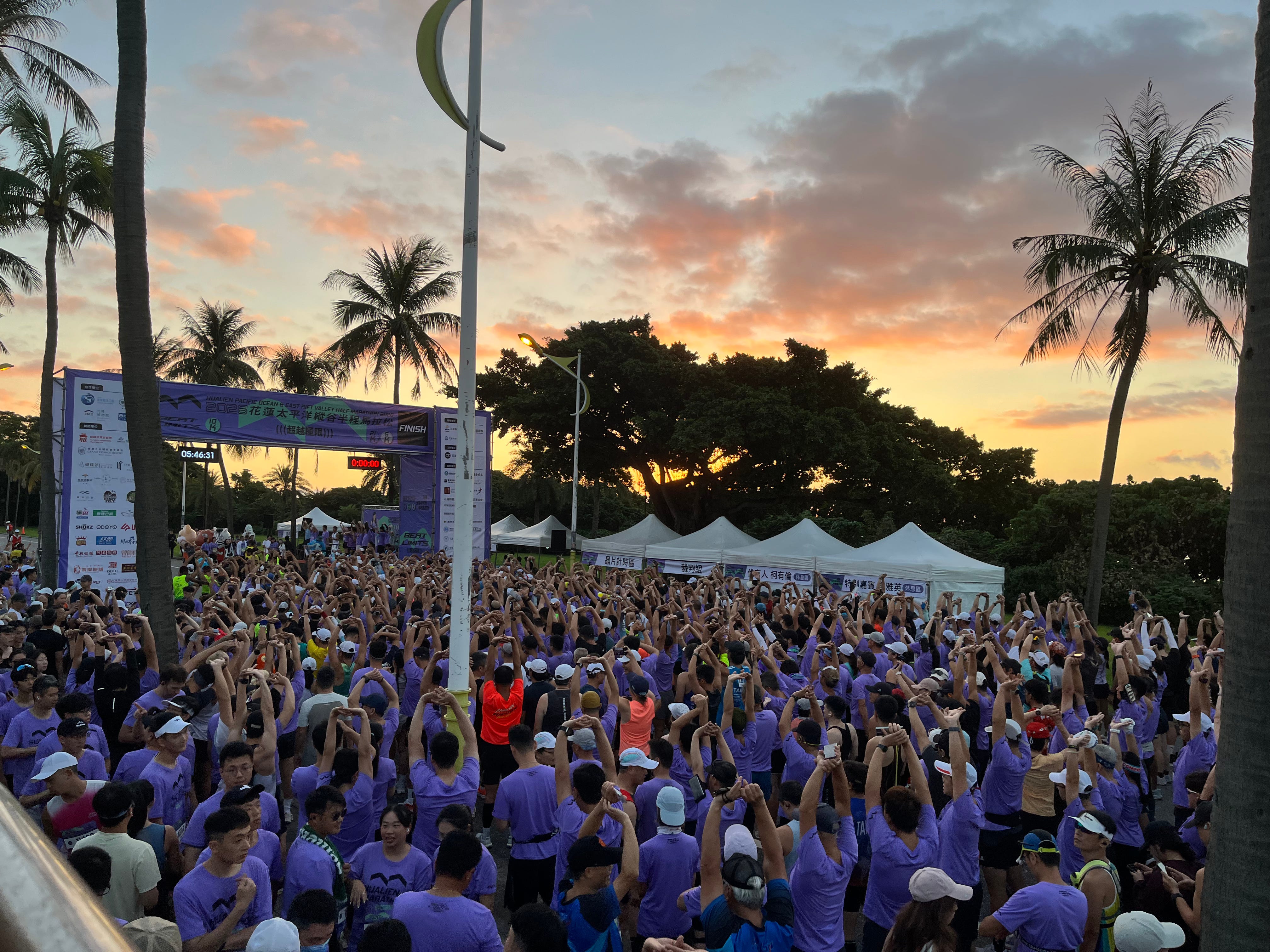
Group stretch at the starting line of the half-marathon. It was beautiful to run along the coast as the sun rose.
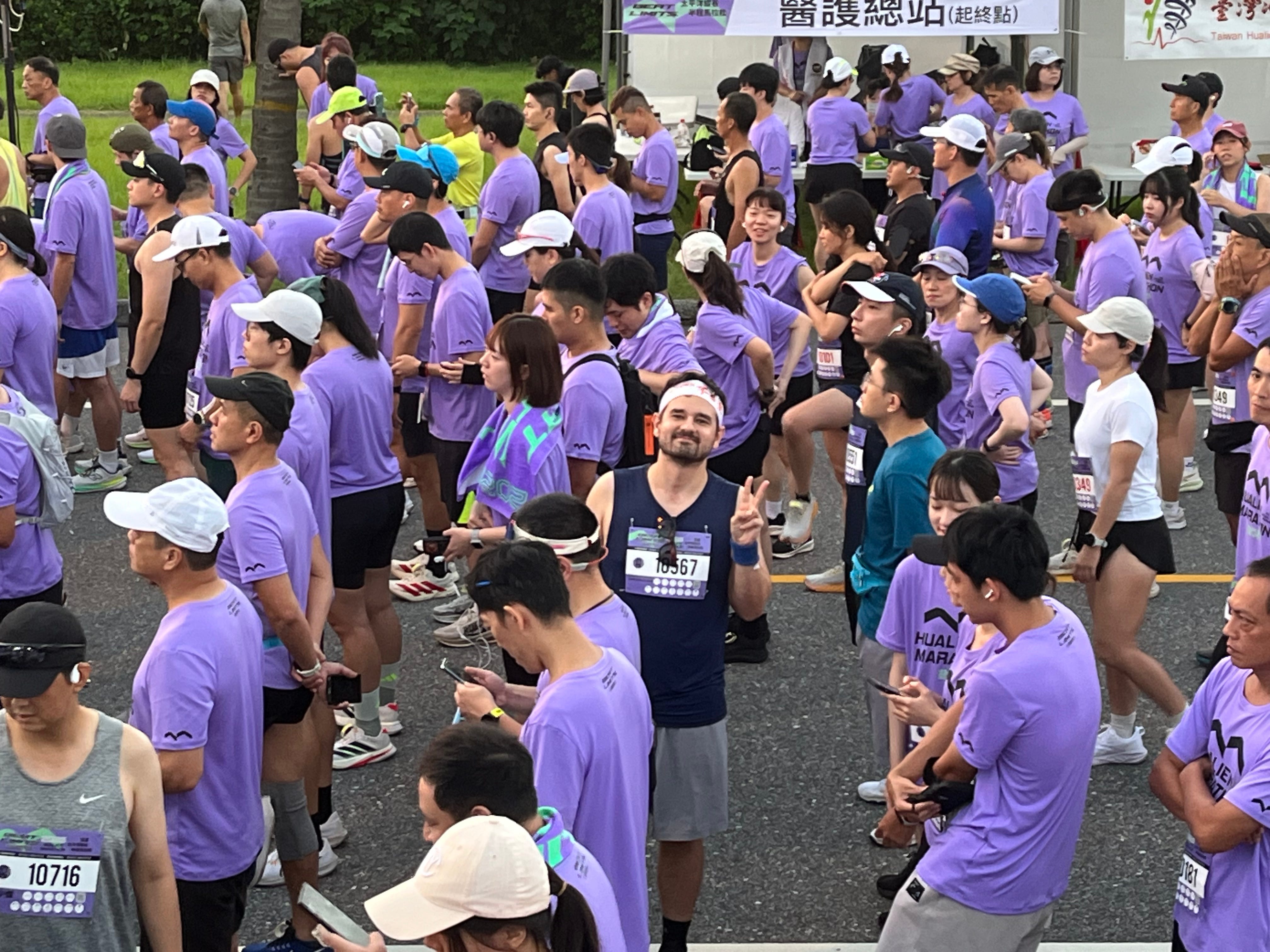
Vibes.
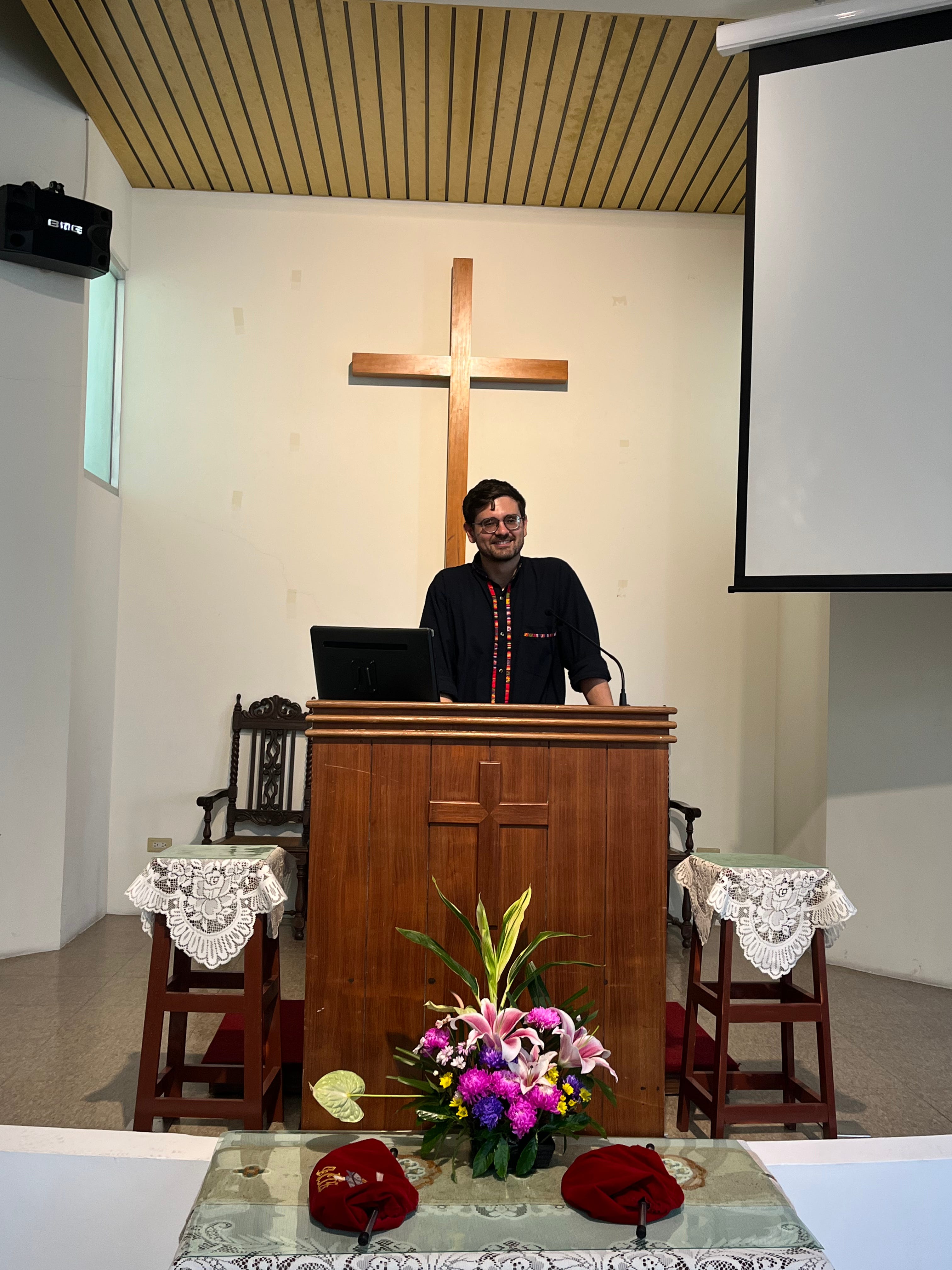
First Mandarin sermon, at BoAi Mennonite church in Hualien. This is staged after the service.
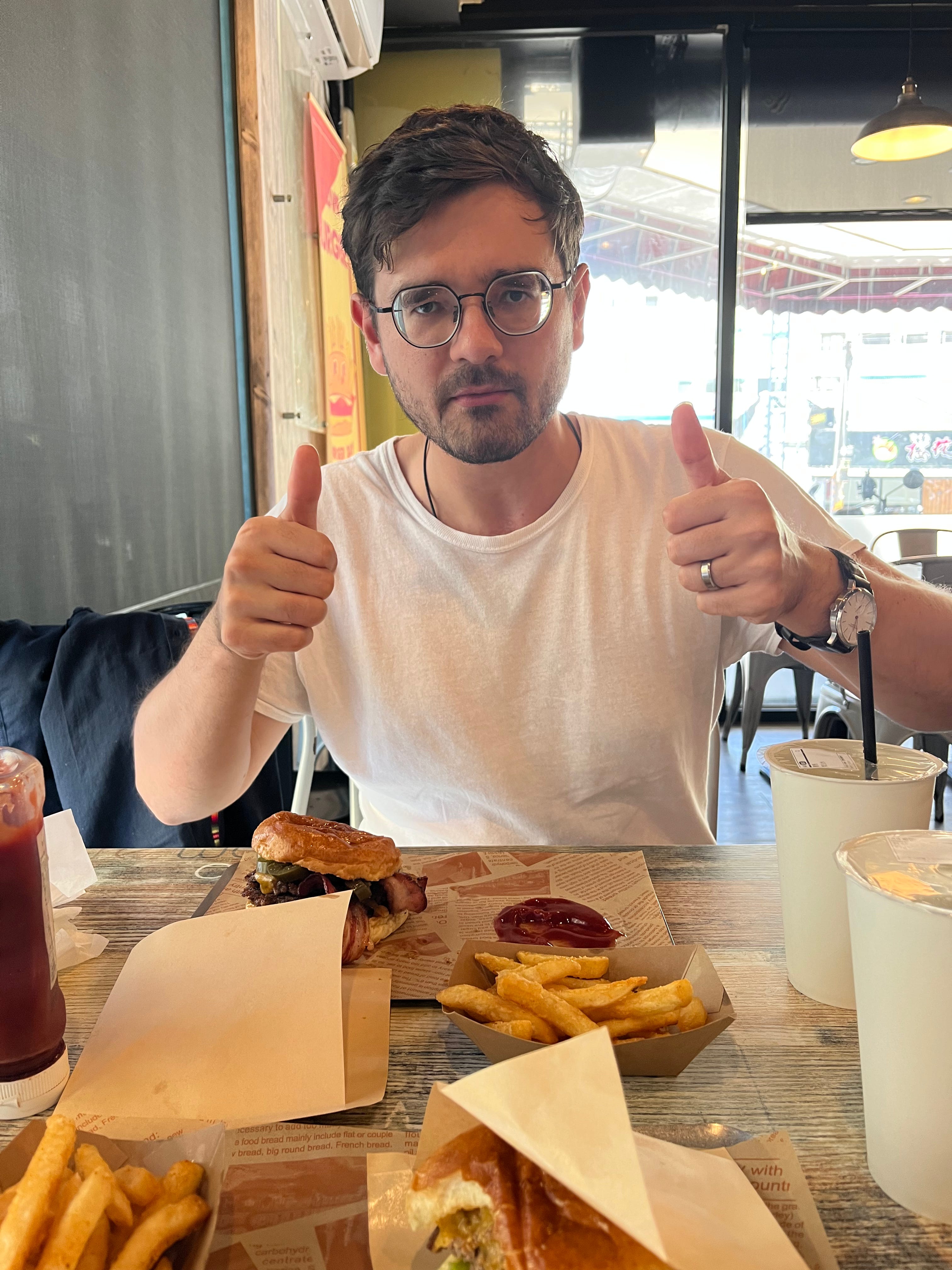
Celebratory burger and fries after said sermon.
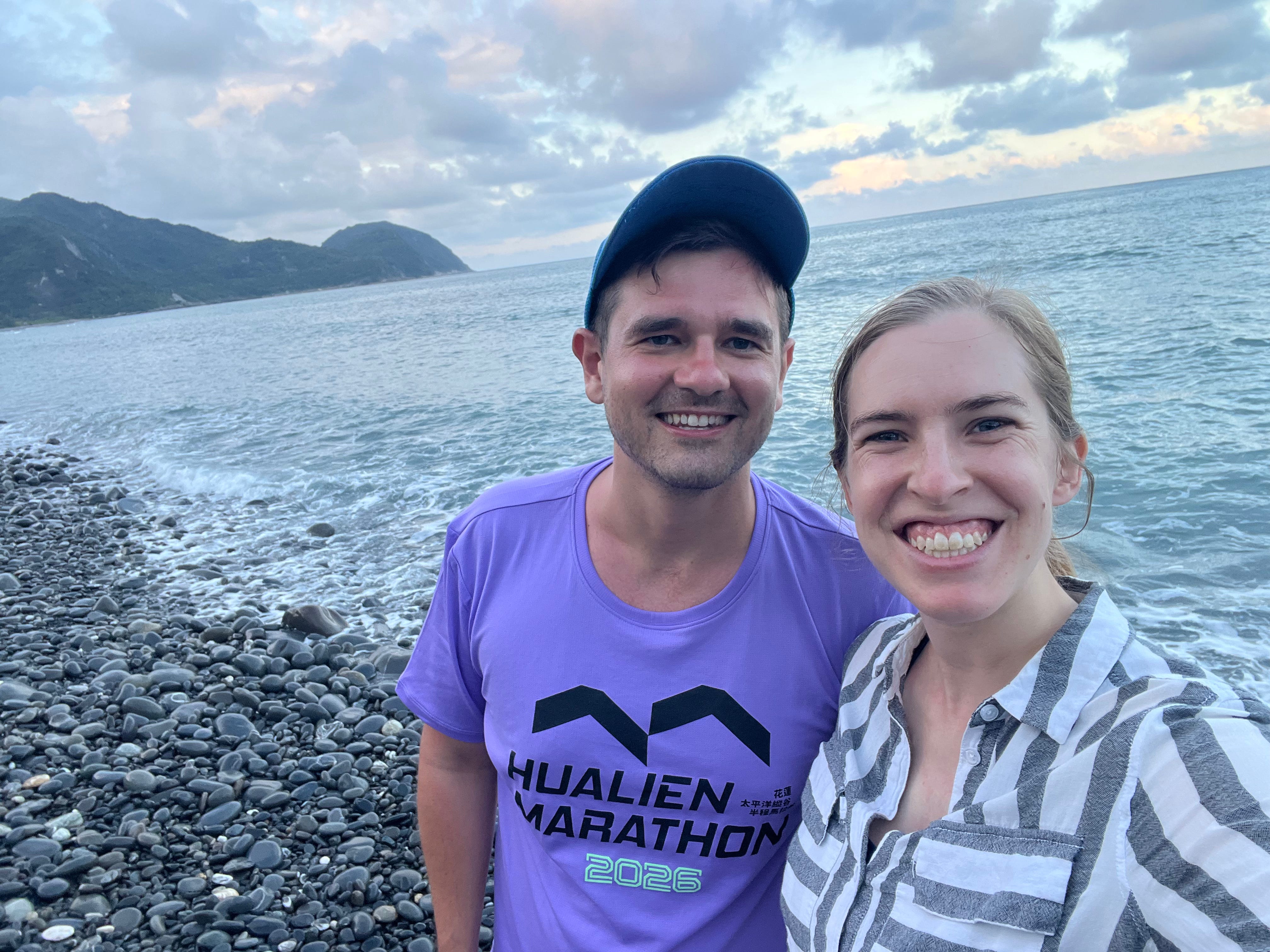
Second morning at the beach — if you look closely, you can see my sunburn from the day before.
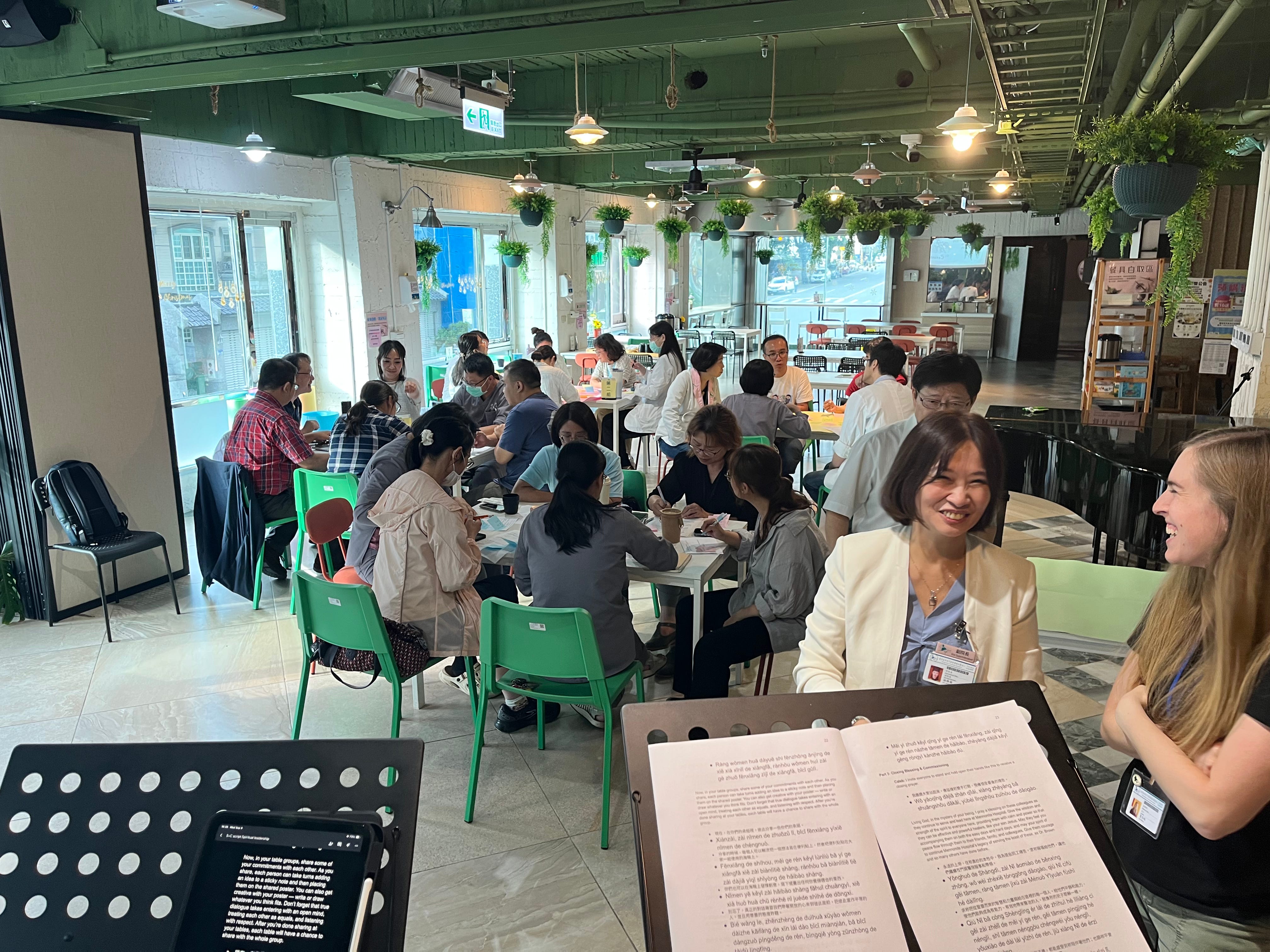
Our leadership seminar; Stephanie is talking with MCH Vice Superintendent Rose, who visited AMBS last year.
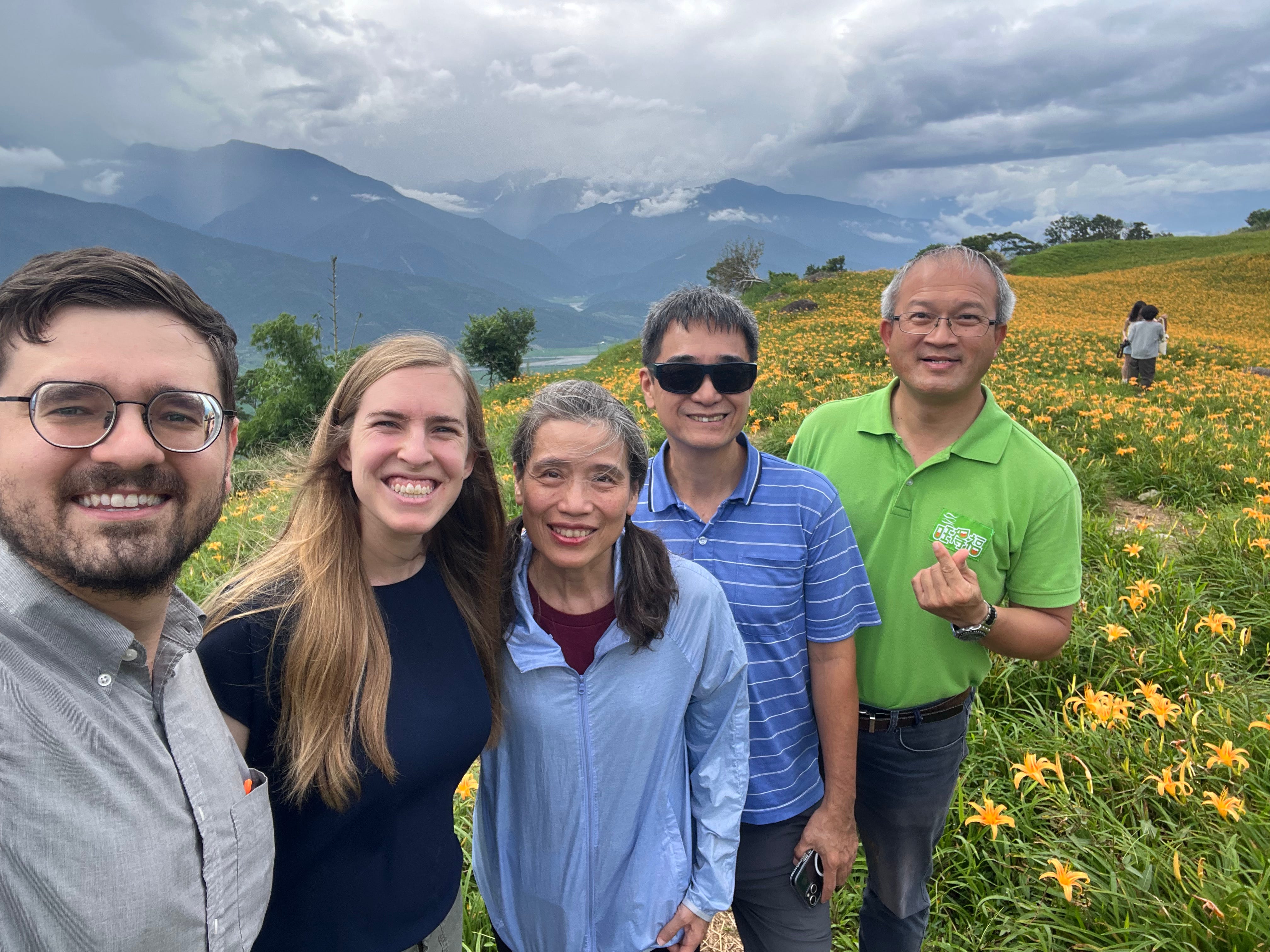
At ‘Little Switzerland’ with Pastor WeiZhen, her husband David, and Pastor Ye on the way back from pastor’s retreat. A really stunning tiger lily-covered mountain overlooking the valley.
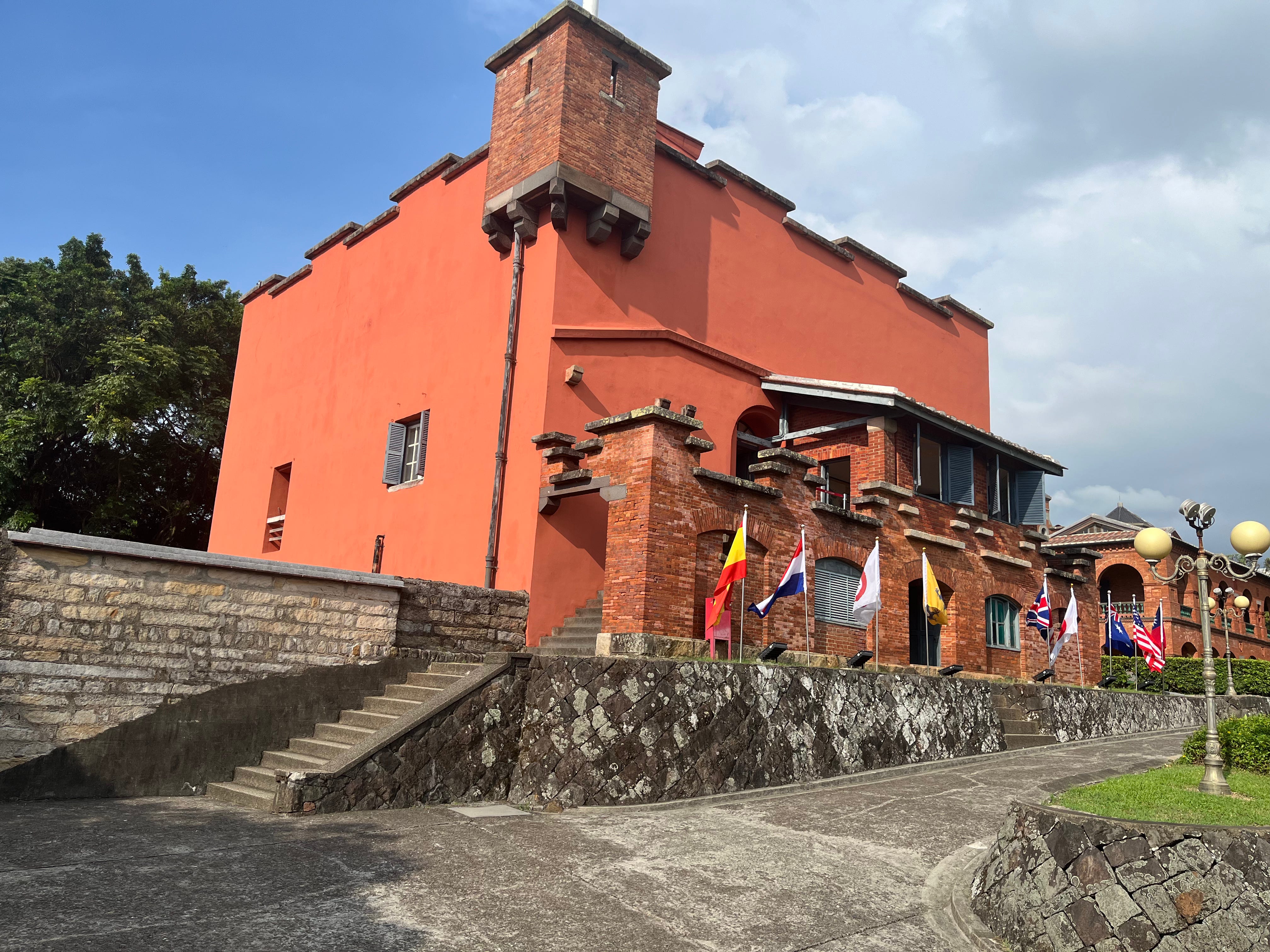
Fort Santo Domingo with flags representing who controlled it over time.
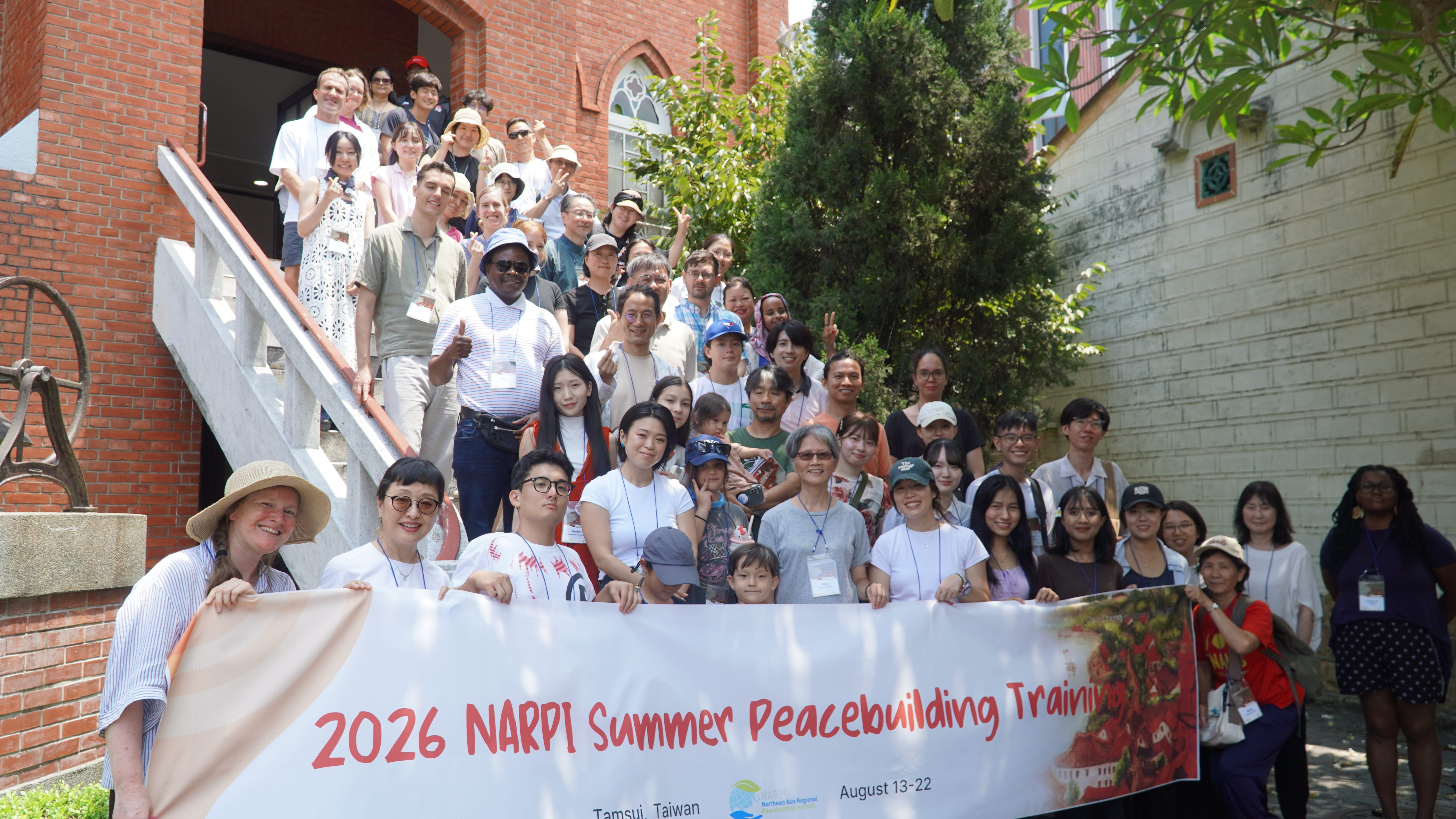
One of many chaotic and fun NARPI group pictures; this is outside the first church built in Northern Taiwan. Shoutout many NARPI friends!
Always good to hear from y'all! You do both look good.
I read a lot too. Two of the last I've read are: "An Imperfect God: George Washington, his Slaves, and the Creation of America," by Henry Wiencek (a 2003 copyright). Just appealed to me. I've read some about Thomas Jefferson and wanted to see how this one compared. Near the end of his life he had seen the awfulness of slavery and upon his death all his slaves were to be freed. (TJ's too but he had too many debts; had so many ideas and was always adding onto Montecello.)
The other was "When We See You Again" by Rachel Goldberg-Polin about the death of her only son, 23 y.o., Hersh by Hamas in the tunnels in Rafah, Gaza. I'd seen her interviewed on one of the shows and put it on my list to read. They were very Jewish so there was much about the Judeo-Christian tradition that was fascinating. He had been held for 328 days. Every day her and her husband, Jon wore a piece of masking tape on their clothes w/ which day it was.
Love and best wishes,
Aunt Dawn
So good to hear about your adventures! Jam packed calendars!